
The drive from Doha to the UAE east coast is not a simple motorway hop. There is no shared land border between Qatar and the Emirates, so the route swings west through Saudi Arabia before turning back towards the Gulf of Oman. That detour shapes the whole journey, adding border checks, separate vehicle paperwork and a long stretch of desert highway. Anyone planning a weekend on the Indian Ocean side of the Emirates needs to treat this as a full overland expedition, not a casual Friday afternoon departure.
The reward is a different kind of coast. The UAE east coast faces the Gulf of Oman, where rocky headlands drop into clear water and the shore feels less polished than the Arabian Gulf resorts. For divers, snorkellers and road trippers based in Qatar, reaching that coastline means accepting a route of roughly 700 to 800 kilometres depending on the final emirate. The drive crosses three national borders in one day, which demands patience, preparation and a willingness to sit through queues that no amount of planning can fully predict.
Why the Route Swings Through Saudi Arabia
Qatar and the UAE do not touch. The only land corridor between them runs through Saudi Arabia’s Eastern Province, a fact that surprises many first-time drivers. From Doha, the route heads to the Abu Samra crossing, enters Saudi Arabia at Salwa, then follows Saudi roads towards Al Batha before exiting into the UAE at Al Ghuwaifat. The Saudi transit from Al Batha to Salwa or Abu Samra adds roughly 150 kilometres to the trip, while Abu Samra to Doha is about 100 kilometres.
The total one-way distance can reach around 800 kilometres for destinations such as Ras Al Khaimah or Fujairah. This is a genuine cross-country drive with fuel stops, rest breaks and border waiting time built into the day. The roads are generally good, but long straight sections through the Saudi transit can lull a driver into fatigue. Rotate drivers if possible, and stop for ten minutes every two hours even if you feel fine.
Border Crossings and Paperwork
The first major checkpoint on the Qatar side is Abu Samra, which connects to Salwa in Saudi Arabia. Drivers need a valid Saudi transit visa for this section, even if they do not plan to stop in the kingdom. Qatar residents also need the Hayya permit for GCC residents, which costs QAR 100 and can cover stays of up to 60 days under the November 2025 update. Vehicle insurance requirements are handled separately at the Saudi and Qatar sides, so carry your registration and ownership documents in the driver’s name.
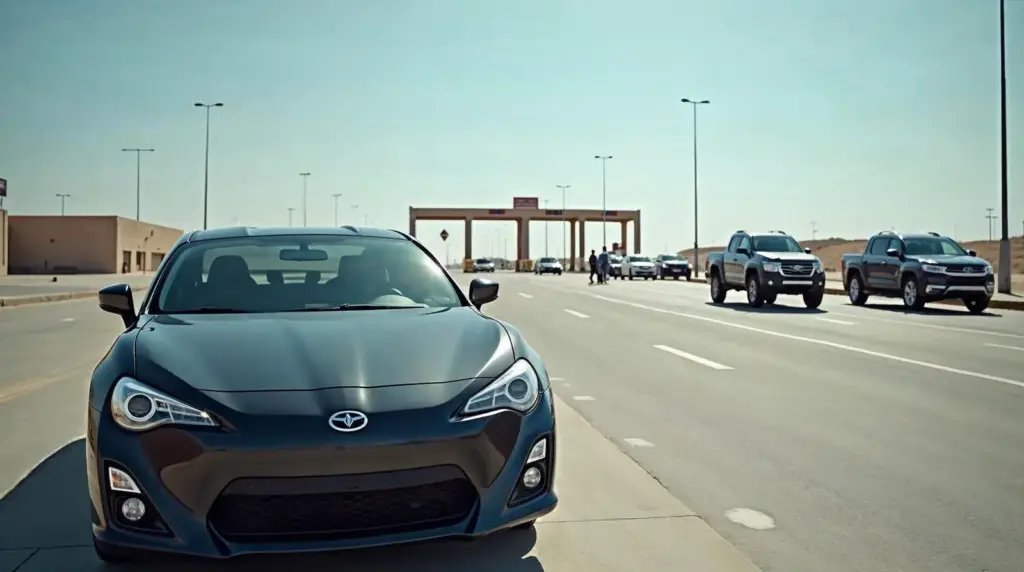
At the UAE side, the entry point is Al Ghuwaifat, the only land border into the Emirates. It operates 24 hours, but the Smart Land Border Crossing system only allows drivers to stay in the car if the vehicle, insurance and ID all match the same name. Border time is hard to predict, and Ramadan periods can stretch queues further, so build in extra margin during those weeks. A full day from Doha to the east coast should be planned as 10 to 12 hours including all stops and border formalities.
| Leg | Approximate Distance | Driving Time | Key Crossing |
|---|---|---|---|
| Doha to Abu Samra | About 100 km | 1 to 1.5 hours | Abu Samra exit Qatar |
| Salwa to Al Batha | About 150 km | 1.5 to 2 hours | Salwa enter Saudi, Al Batha exit Saudi |
| Al Batha to Al Ghuwaifat | Short border section | Under 1 hour | Al Ghuwaifat enter UAE |
| Al Ghuwaifat to UAE east coast | Varies by emirate | 3 to 5 hours | UAE highway network |
The table shows the basic skeleton of the drive, but real-world timings stretch with every queue and document check. Treat the listed driving times as moving time only, not door-to-door estimates. The pure driving time from Doha to the UAE border is often quoted as 7 to 9 hours, a figure that excludes border queues and rest stops. For the east coast, add another 3 to 5 hours depending on whether you aim for Fujairah, Khor Fakkan or Ras Al Khaimah.
Visa and Permit Requirements
The Saudi transit visa is the first document to secure, because without it the entire land route collapses. Qatar residents should also confirm their Hayya permit status before departure, since the rules changed in late 2025 and older information may no longer apply. The permit is tied to GCC residency and does not replace a passport, so carry both documents in the front of your travel folder. Vehicle insurance is handled at the borders, but do not assume your Qatari policy covers Saudi or UAE roads.
Timing the Drive
A dawn departure from Doha gives the best chance of reaching the Gulf of Oman before nightfall, especially in summer when heat and fatigue slow everything down. Weekend traffic patterns also matter, with Thursday afternoons and Friday mornings heavy around Doha and Abu Samra. UAE highways fill with weekend travellers heading east, so if your schedule allows, leave on a Wednesday or early Thursday and return on a Sunday to avoid the worst queues. The borders themselves are open 24 hours, so a very early start is always better than a late one.
What the Drive Actually Feels Like
The first hour out of Doha is flat and fast, with the desert opening up on both sides of a well-maintained highway. The Abu Samra crossing is functional rather than scenic, a place of concrete lanes, waiting cars and the slow shuffle of paperwork. Once into Saudi Arabia, the landscape changes little, but the road signs and speed limits remind you that this is a different country with its own rules and rhythms. The Saudi transit section from Salwa to Al Batha is the emptiest part of the drive, so fill the tank before leaving each border area and carry water and snacks.
Entering the UAE at Al Ghuwaifat brings a sudden shift in traffic density and road quality. The highway north towards the east coast is fast and well signed, but it passes through industrial zones and city outskirts before the mountains of the Hajar range appear. That first glimpse of rocky peaks is the signal that the Gulf of Oman is close. The final stretch towards Fujairah or Khor Fakkan runs through tunnels and along wadi edges that feel a world away from Doha.
Choosing Your East Coast Destination
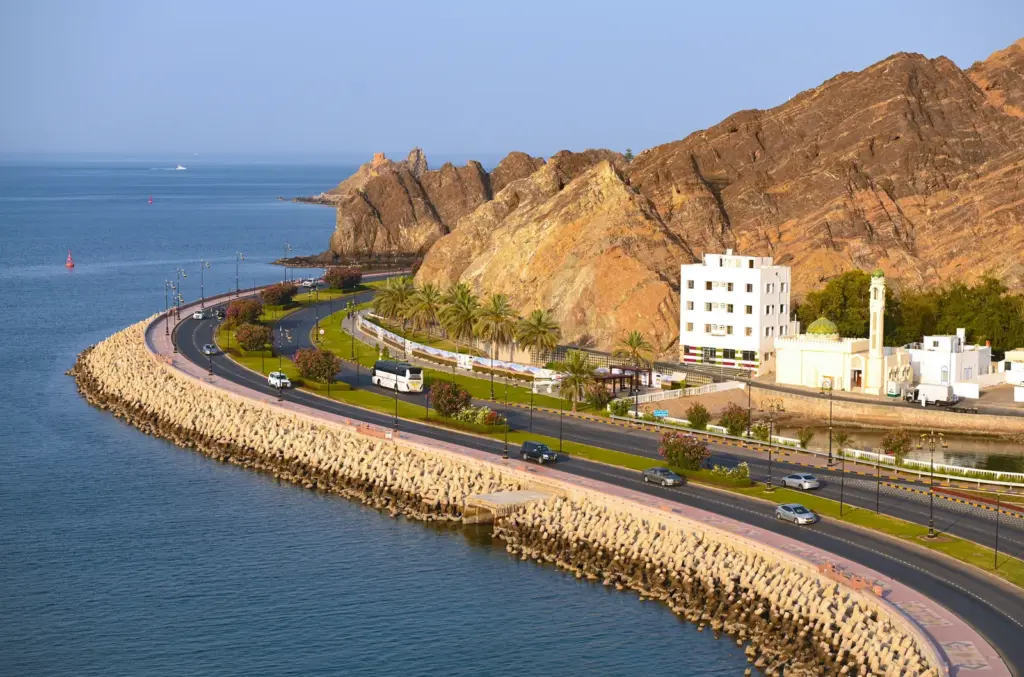
Ras Al Khaimah sits on the northern end of the UAE’s east coast, closer to the Musandam peninsula than to Fujairah. It has a more developed resort strip and is a practical choice for families who want beaches and restaurants after a long drive. The distance from Doha to Ras Al Khaimah is about 800 kilometres one way, so it works best as a three-night stay rather than a quick weekend dash. Fujairah and Khor Fakkan sit further south along the Gulf of Oman, facing open water and backed by steep mountains, with dive sites and snorkelling spots that draw divers from across the region.
Packing for a Three-Border Drive
A road trip through three countries needs a different packing list than a flight to a resort. Keep passports, visas, permits, driving licences and vehicle registration in one waterproof folder that stays within reach of the driver. Print paper copies of every document, because phone batteries die and border officers often want physical pages. A small cash reserve in Qatari riyals, Saudi riyals and UAE dirhams covers border fees and small purchases where cards are not accepted.
The car itself needs attention before departure. Check tyre pressure, coolant and oil levels, and make sure the spare wheel and jack are in working order. Carry a basic tool kit, a torch and a first aid box. For summer drives, pack at least five litres of drinking water per person and a cooler bag for food. The Saudi transit section has long gaps between services, so self-sufficiency is not a luxury.
Entertainment and comfort matter more than people expect. A phone mount, charging cables and offline maps are essential, because mobile data can drop in remote sections. Download the route before leaving Doha and keep a paper map as backup. For passengers, neck pillows, sunglasses and a playlist or audiobook make the long middle hours pass more easily. The drive is not difficult, but it is long, and small comforts reduce the strain.
Flying Versus Driving: A Fair Comparison
Flying from Doha to the UAE east coast is faster by a wide margin. Direct flights from Doha to Dubai or Sharjah take about 1 hour 15 minutes, and from there a rental car or transfer reaches the east coast in another two to three hours. For a two-night break in Ras Al Khaimah, flying usually makes more sense because it preserves the short holiday time. The road journey consumes a full day in each direction, which is hard to justify for a weekend.
Driving earns its place on longer trips, especially for groups sharing fuel and border costs. A car full of dive gear, camping equipment or family luggage avoids airline baggage limits and gives flexibility once you arrive. The road trip also suits travellers who enjoy the process of crossing borders and watching the landscape change from Qatari desert to Saudi plains to Hajar mountains. For most travellers, the real decision is between a short flight and a long drive, and if you have the time and paperwork, the drive offers a rare overland connection between two Gulf coasts.