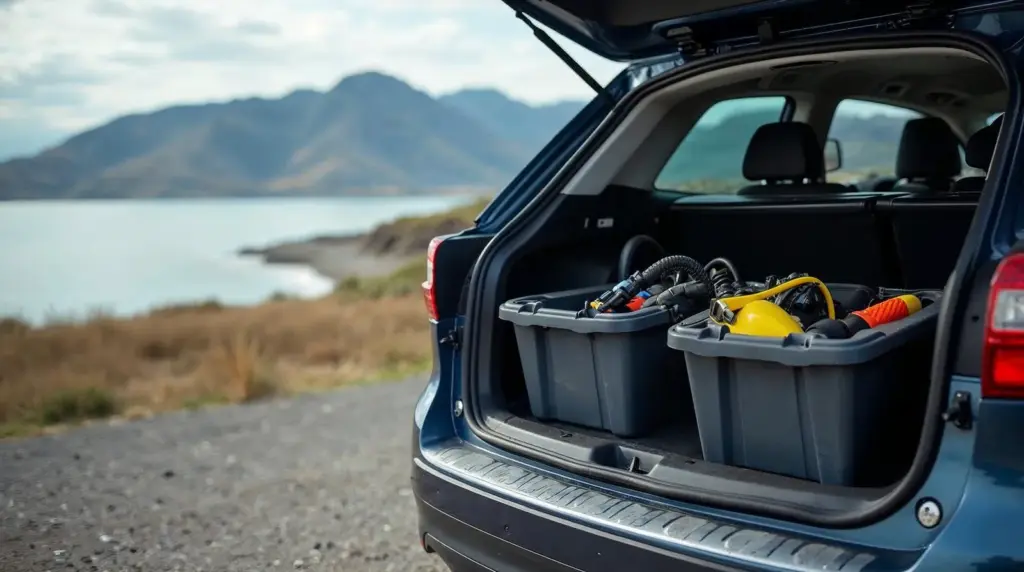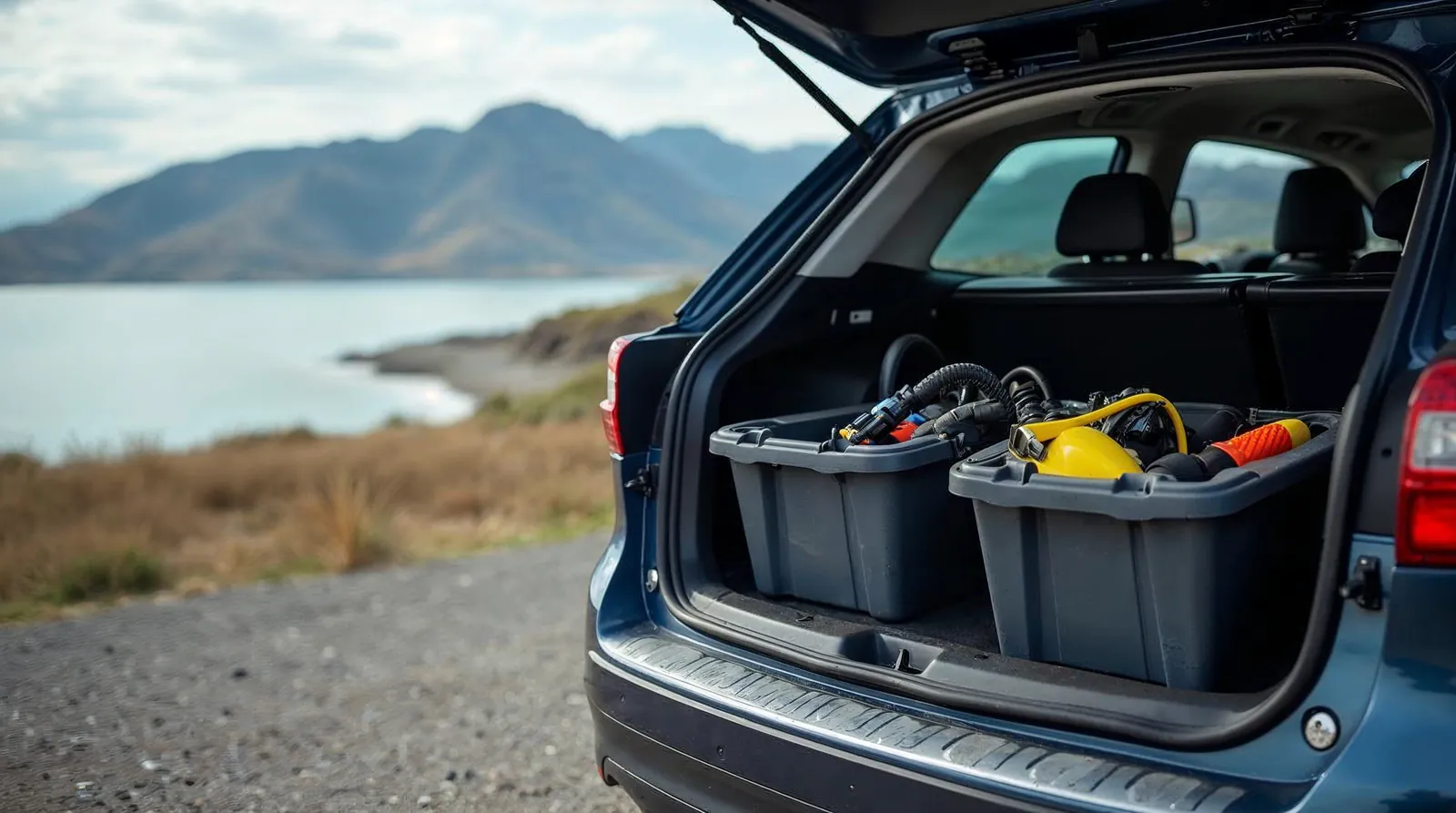
The Friday morning ritual begins in the dark, with a thermos of cardamom tea balanced on the roof of the car. The boot is open, the back seats are folded flat and a familiar puzzle lies ahead. Two sets of regulators, a pair of backplates, four tanks, a cool box holding lunch and a mesh sack of damp wetsuits all need to find their place. The drive from Doha or Dubai to the quieter coves of the Musandam or the east coast demands a car that is not just fuelled, but loaded with a kind of deliberate calm. A poorly packed vehicle rattles on the mountain descents and leaves you fumbling for a fin strap at the water’s edge.
The goal is simple enough to state and endlessly fiddly to achieve. You want heavy items low and braced, delicate gear protected from crushing, and wet things sealed away from the dry interior. You want to be able to open a single container and find your mask, computer and surface signal buoy without unpacking the entire car. This is not about buying a larger vehicle or a specialised rack system. It is about a system of tubs, weight placement and a checklist that turns the pre-dawn scramble into a ten-minute, silent load. The reward is arriving at the shore with your head already in the water, not still sorting through a jumble of neoprene and straps in the gravel.
The Foundation: Hard Tubs Over Soft Bags
The single most effective decision you can make is to abandon the idea of one enormous rolling dive bag for the car journey. Soft bags collapse, leak salt water into your carpet and offer zero protection when a steel tank shifts on a tight corner. Instead, use rigid plastic bins with secure, snap-on lids. The classic approach, borrowed from cold-water divers who have been doing this for decades, is the Rubbermaid-style tub. Two of these turned lengthwise can sit side by side on a folded rear bench or inside a saloon boot, swallowing an entire set of gear each with room to spare.
Weight and Tanks: The Low Centre of Gravity
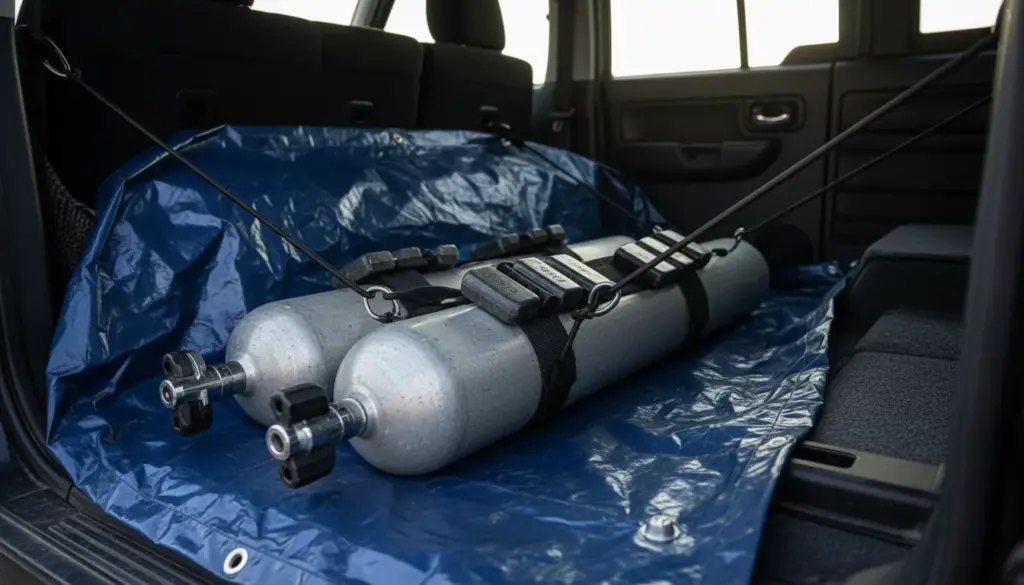
Tanks and lead are the two items that turn a stable car into a top-heavy liability if you stack them high. The rule is firm. Tanks go on the floor, either in the rear passenger footwells or laid flat in the boot, braced against the back of the rear seat. They must not be able to roll. A simple way to lock them in place is to pack the heavy Rubbermaid bins snug against them, creating a solid block of gear that cannot shift forward under hard braking. Lead weights follow the same logic, placed in the spare wheel well or in a dedicated, reinforced bag on the boot floor.
Securing the Load for Mountain Roads
The road from Ras Al Khaimah into the Musandam or the winding descent to Dibba is not a motorway. The hairpins and sudden braking for wandering goats will test every loose item in your car. Ratchet straps or simple cam-buckle ties threaded through the rear cargo hooks can lock the entire stack of bins and tanks into a single, immovable unit. This takes an extra ninety seconds during packing and saves you from the sound of a regulator first stage bouncing off the inside of the boot lid on a switchback.
The Cool Box: More Than Lunch
A hard-sided cool box is the second unsung hero of the dive weekend, and its role extends well beyond keeping laban and sandwiches cold. On a Gulf summer day, the interior of a parked car can exceed sixty degrees Celsius in minutes. A cool box becomes a refuge for items that degrade in extreme heat. Your dive computer, camera housing O-rings, sunscreen and any medications from the first-aid kit all benefit from a few degrees of insulation. A small, sealed plastic container inside the cool box keeps these items dry while the ice melts around them.
Keeping the Car Dry After the Dive
Returning to the car in a dripping wetsuit is the moment when all your careful packing can unravel. The solution is a dedicated changing mat or a large, cheap off-cut of outdoor carpet that lives in your boot. You stand on it, strip off the wetsuit and immediately drop the suit into a heavy-duty mesh bag or directly into the waiting bin. Your feet never touch the gravel or the car’s interior while wet. A large microfibre towel, far more absorbent and compact than a cotton beach towel, dries you off before you pull on a dry shirt.
The Save-a-Dive Kit: A Small Bin of Its Own
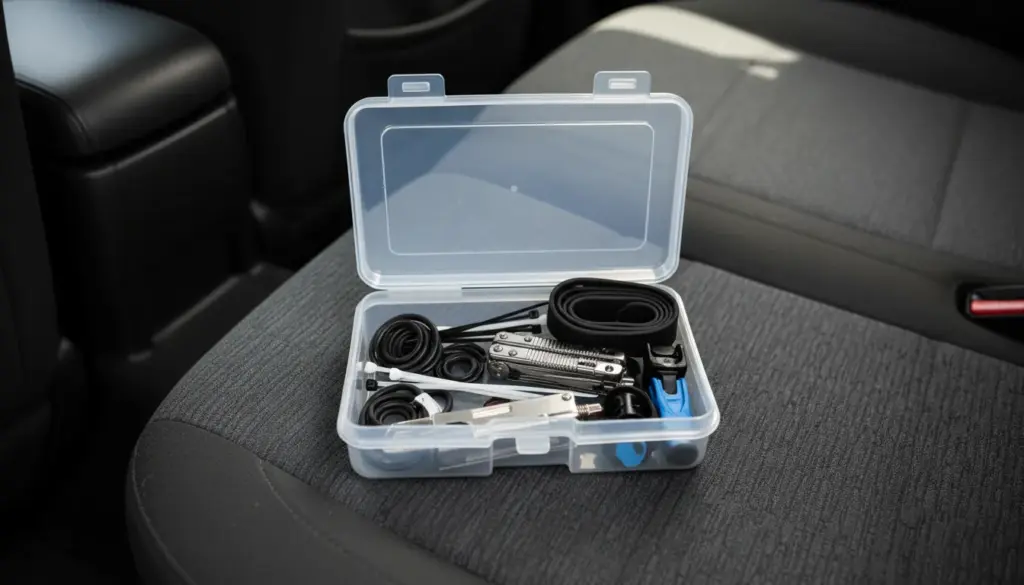
A dedicated save-a-dive kit is not a luxury for the divers who tinker with regulators at the kitchen table. It is the difference between losing a dive to a snapped fin strap and fixing it in three minutes with a spare buckle and a zip tie. This kit lives permanently in the car, not in the house, so it never gets left behind. A small, clear plastic box with a secure lid, roughly the size of a lunchbox, is the ideal container. Inside, you keep the items that fail suddenly and predictably.
The Checklist: Paper, Not Mental
The final piece of the system is the least glamorous and the most reliable. A printed checklist, kept in the glovebox, eliminates the 5 a.m. fog of forgetting your certification card or leaving a weight belt on the garage floor. The list is divided into three columns. Essentials cover your C-card, hat, sunscreen, water and a bag of nutritious snacks that will not melt. Gear runs through every item from BCD and regulator to hood, gloves and surface signal. The third column is the save-a-dive kit and first-aid pouch, ticked off as a single unit once you have confirmed the box is in the car.
Loading Sequence for the Night Before
The order in which you load the car determines how smoothly the morning unfolds. The night before departure, place the tanks and weights in the car first, on the floor and secured. Then load the two Rubbermaid bins of gear, braced against the tanks. The save-a-dive kit and the first-aid pouch tuck into a side pocket or a footwell. The cool box, packed with chilled drinks and heat-sensitive items, sits on top, accessible. Your dry bag of clothes and a separate bag for towels and the changing mat go in last, ready to be pulled out first at the site.
Beyond the mechanical order of packing, there is a deeper satisfaction in knowing that every item has a designated place and a reason for being there. The system rewards consistency, and after a few trips it becomes second nature. You begin to notice the small efficiencies that save time and reduce frustration. A well-packed car also communicates a quiet competence to your dive buddy, who can relax knowing that the logistics are handled. This confidence allows both of you to focus on the dive plan, the entry point and the marine life you hope to encounter. The pre-dive briefing happens in a calm state of mind, not in a flurry of searching for misplaced gear. Over time, the packing ritual itself becomes a meditative start to the adventure, a series of deliberate actions that signal the transition from ordinary life to the underwater world. The following list captures the core principles that guide this entire approach.
- Place all heavy tanks and lead weights on the floor of the boot or in the rear footwells first.
- Use rigid plastic bins with snap-on lids to keep wet gear sealed and the car interior dry.
- Pack a dedicated save-a-dive kit with spare straps, O-rings, tools and first-aid basics.
- Keep a hard-sided cool box accessible on top for chilled drinks and heat-sensitive electronics.
- Follow a printed three-column checklist every trip to ensure nothing is left behind.
- Secure the entire load with ratchet straps to prevent movement on winding mountain roads.
- Rinse gear at the site by filling a bin with fresh water, allowing a soak before the drive home.