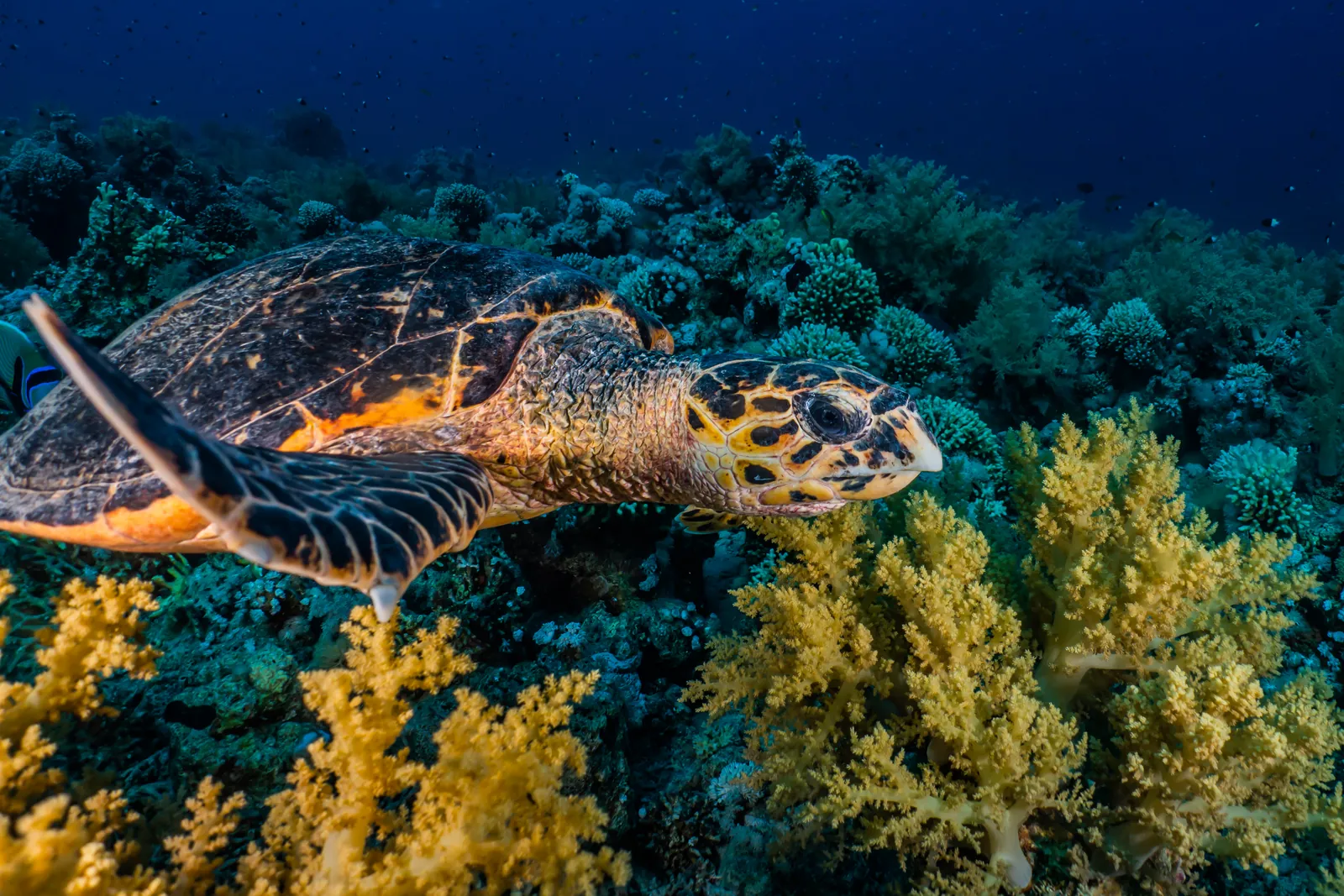
The Gulf is not a place that gives up its secrets easily. Between the heat haze of summer and the sudden chop of a shamal, the water can look empty from a passing boat. Yet below the surface, a slower calendar is turning. Hawksbill turtles return to the same shallow reefs, juvenile green turtles drift into sheltered bays, and rays move across sandy flats with the changing light. For anyone who keeps a logbook of weekend journeys, these sightings are not random. They follow the seasons as closely as the flowering of desert shrubs after rain.
Along the coast of Qatar and the wider Gulf, marine life is shaped by extreme conditions. Water temperatures swing from mild winter coolness to summer warmth that would stress many species. Turtles and rays have adapted to this rhythm, and so should anyone hoping to see them. The best encounters come from slowing down, watching the surface for a head or a wingtip, and understanding where these animals feed and rest. This is field knowledge, gathered over many seasons and shared here for readers who prefer a pair of binoculars to a crowd.
Reading the Turtle Calendar
Sea turtles spend almost all their lives at sea, returning to beaches only as eggs, as hatchlings, or as nesting females. In the Arabian region, green turtles gather in large numbers in Saudi Arabia and Oman, while hawksbills nest in Iran, Kuwait, Oman, Qatar, Saudi Arabia, and the United Arab Emirates. Oman also holds one of the largest loggerhead rookeries in the world, with thousands of nesting loggerheads and a handful of olive ridleys. For most of the year, though, these turtles are waterborne and widely dispersed.
The Gulf itself is a unique environment, with extreme water and air temperatures that shape turtle behaviour. Hawksbills favour coral and rocky habitats, while green turtles graze on seagrass beds. Seasonal sightings often pick up when water temperatures stabilise in spring and autumn. During the hottest months, turtles may move to deeper or more shaded water. During cooler spells, they can be seen basking at the surface in the early morning, absorbing warmth before diving to feed.
On the east coast of the UAE, in the Gulf of Oman, a thriving aggregation of juvenile green turtles returns season after season to the same sheltered sites. These young turtles are not yet breeding, but they show strong site fidelity. That makes certain shallow bays and seagrass meadows reliable places to look. A quiet approach by kayak or a slow drift with the engine off will often reveal a small head breaking the surface, followed by the curve of a shell.
Where Rays Cross the Shallows
Rays are less studied than turtles in the Gulf, but they are no less seasonal. Eagle rays and cowtail rays move across sandy flats and around reef edges, often in small groups. They feed on molluscs and crustaceans buried in the sediment, leaving distinctive pits in the sand. Watching a ray settle onto the bottom and then rise again with a puff of silt is one of the quiet pleasures of shallow-water exploration.
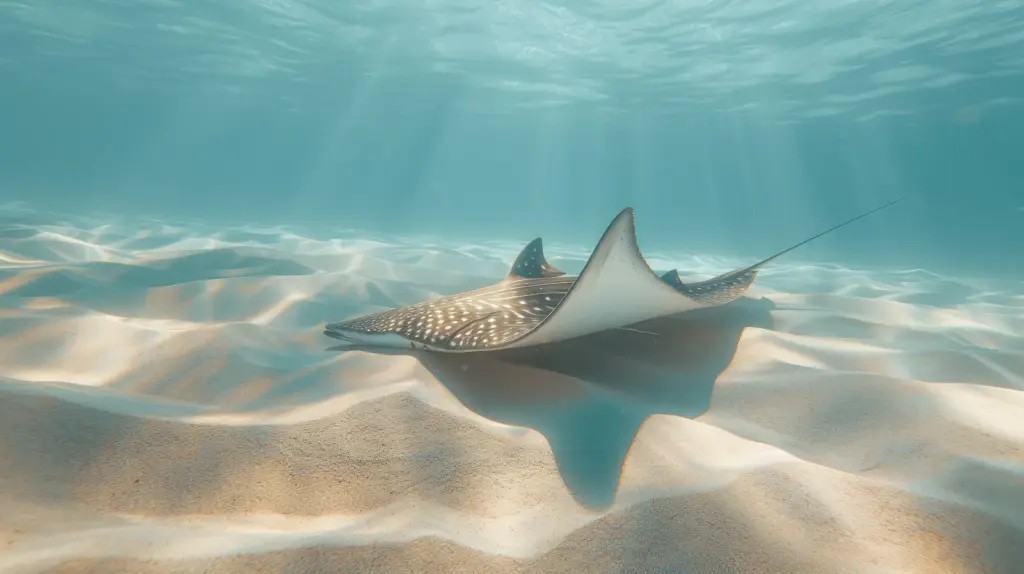
The best time to look for rays is on a rising tide in the early morning or late afternoon. Sunlight at a low angle makes their outlines easier to see from a boat or a low cliff. In winter, rays often come into very shallow water to warm themselves, especially on dark sandy bottoms that hold heat. In summer, they tend to stay deeper during the day and move inshore at night. A torch shone across a calm bay after dark can sometimes reveal the pale underside of a ray gliding just under the surface.
Because rays are easily spooked, the usual advice applies. Move slowly, avoid sudden noise, and never chase one that is already swimming away. A ray that is left alone will often circle back to the same feeding patch. That is the moment to watch, not to grab a camera too quickly. Patience on the water is a form of respect, and it is also the most reliable way to see more.
Seasonal Patterns by Month
No two years are identical, but a rough pattern holds across the Gulf. Cooler water may bring turtles and rays closer to shore in many areas. From April to June, hawksbill nesting activity increases on certain beaches, and turtles may be seen near nesting sites at night. In the hottest months, many animals may move into deeper water, though early mornings can still be productive. October can be a transition month, with calmer seas and clearer water.
The table below summarises the general rhythm for Qatar and nearby Gulf waters. It is not a guarantee, but a field guide based on repeated observations and the known biology of these species. Sea turtles spend most of their lives at sea, returning to land only briefly to nest. Local conditions, such as dredging, boat traffic, or an unusually warm spell, can shift the timing by several weeks.
| Season | Likely turtle sightings | Likely ray sightings | Best time of day |
|---|---|---|---|
| November to February | Juvenile greens in seagrass bays | Eagle rays on shallow flats | Late morning |
| March to May | Hawksbills near coral and rock | Cowtail rays along reef edges | Early morning |
| June to August | Deeper water, night nesting | Rays move offshore by day | First light or after dark |
| September to October | Mixed species in calm water | Rays return to inshore flats | Late afternoon |
For anyone planning a weekend trip, the practical takeaway is simple. Pick a calm day, avoid the middle of the day in summer, and spend at least an hour drifting or anchored quietly near a known feeding area. Binoculars with polarised lenses help cut surface glare. A notebook and a simple sketch of shell patterns or ray markings will sharpen your observation more than any phone camera.
Watching Without Harming
Turtles and rays in the Gulf face real pressures, from boat strikes to habitat loss to light pollution on nesting beaches. In one well-documented season on Anna Maria Island in Florida, 179 of 458 turtle nests had yet to hatch at a late stage, and between 1,974 and 4,470 hatchlings were disoriented by lights. Of those, 171 were found dead. The lesson applies anywhere turtles nest, including the Gulf. Any light visible from the beach can draw hatchlings away from the sea.
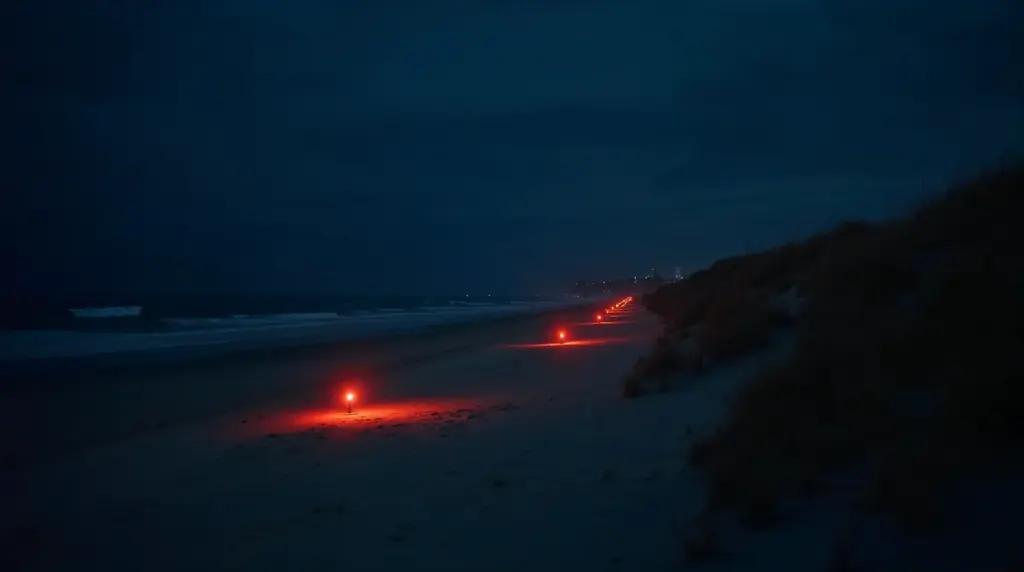
Practical steps make a difference. Keep the landward side of a nesting beach dark, use low shielded lights with red or orange tones, and never use a phone light or flash on the sand at night. Fill in holes and knock down sandcastles so hatchlings do not get trapped. Take all furniture and rubbish away when you leave. These habits protect turtles, but they also benefit migrating birds and other wildlife by darkening the night sky.
On the water, the same restraint applies. Do not chase turtles or rays, do not feed them, and do not touch them. A turtle surfacing to breathe needs space, not a circle of boats. If you find a hatchling on a beach, dead or alive, do not put it in the water. Contact the local wildlife authority or a recognised turtle monitoring group. In some Gulf countries, these organisations may run volunteer programmes and welcome reports from careful observers.
Reading the Water Before You Go
Before setting out, check the tide, the wind, and the moon. A falling tide concentrates food in channels where rays may feed. A full moon can make night observations easier, but it can also change turtle nesting behaviour. Wind from the north can clear the water along exposed coasts, while a light onshore breeze may bring warmer surface water inshore. None of this is complicated, but it rewards attention.
Local fishermen and long-time residents often know where turtles and rays appear each year. Ask in a respectful way, and share your own sightings in return. A simple note about location, date, tide, and behaviour becomes more valuable over time. The Gulf is changing, and seasonal records from ordinary observers can become more valuable over time.
What to Carry on a Watching Day
A good day on the water starts with the right kit. Polarised sunglasses are essential, and a wide-brimmed hat reduces glare. Carry water, a simple first aid kit, and a fully charged phone in a waterproof case. A small notebook and pencil work better than a phone in bright light. If you use binoculars, choose a pair that works well in humid conditions.
For those who photograph wildlife, a long lens is safer than a close approach. Never use flash on turtles or rays. The goal is to observe without changing the animal’s behaviour. If a turtle dives or a ray bolts, you have already come too close or moved too quickly. Back off and wait. The best sightings happen when the animal forgets you are there.
Above all, leave the beach and the water as you found them. Turtles and rays are not attractions to be collected or chased. They are part of a living Gulf that still holds surprises for anyone willing to look carefully. The seasonal return of a hawksbill to the same reef, or a ray to the same sandflat, is a quiet reminder that the coast keeps its own time. We are only visitors to that calendar.