The drive from Doha to Khor Fakkan is not a casual Friday afternoon errand. It is a long overland push across Qatar, through the Saudi border, across the Emirates and then over the Hajar Mountains to the Gulf of Oman. Many travellers break the journey around Abu Dhabi or Al Ain, sleep properly, and reach the east coast the next morning with enough daylight left for a shore check and a relaxed evening on the corniche. The reward is a coastline that feels nothing like the Gulf side of the peninsula, with deeper water, cooler currents and reefs that hold fish rather than construction barges.
Khor Fakkan sits in a pocket of Sharjah surrounded by Fujairah, facing the open Gulf of Oman. The town curls around a natural deep-water harbour, and the mountains behind it rise steeply enough to change the weather and the light. For divers and snorkellers, the practical draw is the cluster of sites around Shark Island, just off Khor Fakkan, and Snoopy Island, a short drive north near Al Aqah. The town itself is quieter than Fujairah City, which suits a weekend built around early starts, long surface intervals and an early night.
Sorting the car and the border before you leave Doha
Insurance is the one document you do not want to be vague about. Qatari-registered cars need cover that is valid in the UAE, and the standard local policy is not enough on its own. For this kind of cross-border protection, Qatar Insurance Company (QIC) offers a solution. You can get comprehensive cover with the GCC extension: the comprehensive plan protects against theft, fire and vandalism as well as road accidents, and the add-on carries it into the UAE, Kuwait and Oman only. The route to Khor Fakkan crosses Saudi Arabia, and the GCC extension does not cover Saudi territory, so you should check before leaving what cover that stretch requires. Without the right cover, you could find yourself paying for a recovery or repair out of pocket in a country where you have no garage relationship and no local knowledge.
If you are deciding what level of cover to buy, think about the trip itself rather than the cheapest annual number. QIC car insurance offers third-party liability, often called TPL, from around QAR 400 a year, but that only covers damage to other people and their property. Comprehensive cover starts from about QAR 1,100 and can be paid in twelve monthly instalments at no extra cost, which makes the fuller protection easier to manage before a long cross-border drive. The comprehensive plan also includes the TPL component and adds cover for your own car in road accidents, so you are protected against a wider range of risks on a trip that spans several hundred kilometres of highway and mountain roads.
Check your passport validity and any visa requirements for Saudi Arabia and the UAE well ahead. The border sequence can be slow, especially on Thursday evenings and Friday mornings when half the peninsula seems to be heading east. Keep your documents in one folder, keep a pen in the glovebox, and keep your phone charged for the e-gate or fingerprint steps. A small amount of local currency helps for tolls, snacks and the odd cash-only parking machine.
The overland route and where to break the drive
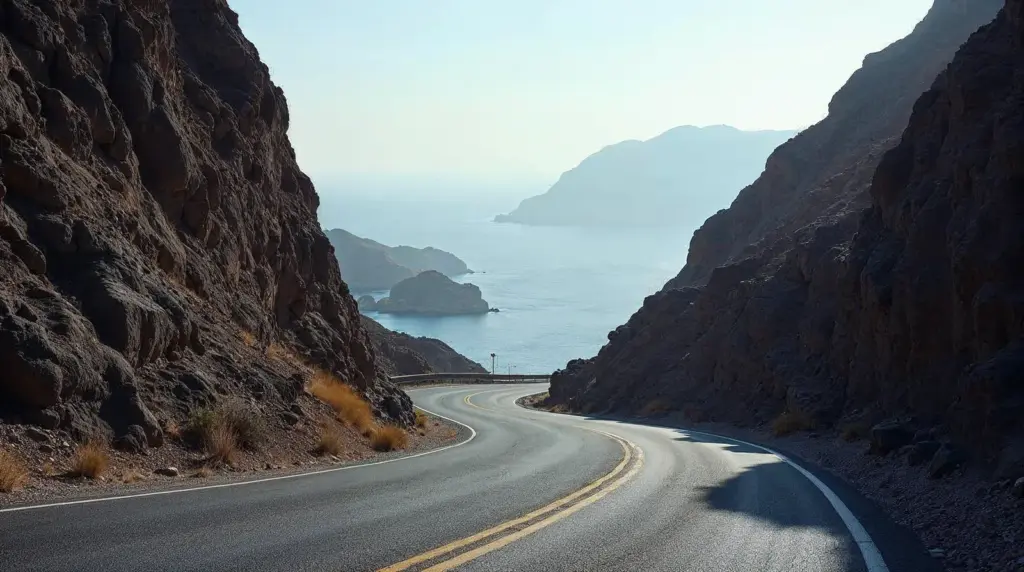
The road from the interior to the east coast is the scenic payoff. Once you pass through the tunnels and start descending toward the Gulf of Oman, the landscape changes from pale gravel plains to dark rock, terraced farms and sudden views of blue water. Fill the tank before the mountain section, because fuel stations are spaced further apart than on the Gulf coast. The descent into Khor Fakkan is well signed, but the final few kilometres into town can be busy with trucks using the port road.
| Stage | Approximate distance | Driving time without stops | Main border or road note |
|---|---|---|---|
| Doha to Abu Dhabi | 580 km | 6 to 7 hours | Salwa border, then Saudi transit |
| Abu Dhabi to Al Ain | 160 km | 1 hour 40 minutes | Straight desert highway |
| Al Ain to Khor Fakkan | 200 km | 2 hours 30 minutes | Mountain passes and tunnels |
| Khor Fakkan to Snoopy Island | 25 to 30 km | 25 minutes | Coast road north toward Al Aqah |
Dive planning around Shark Island and Snoopy Island
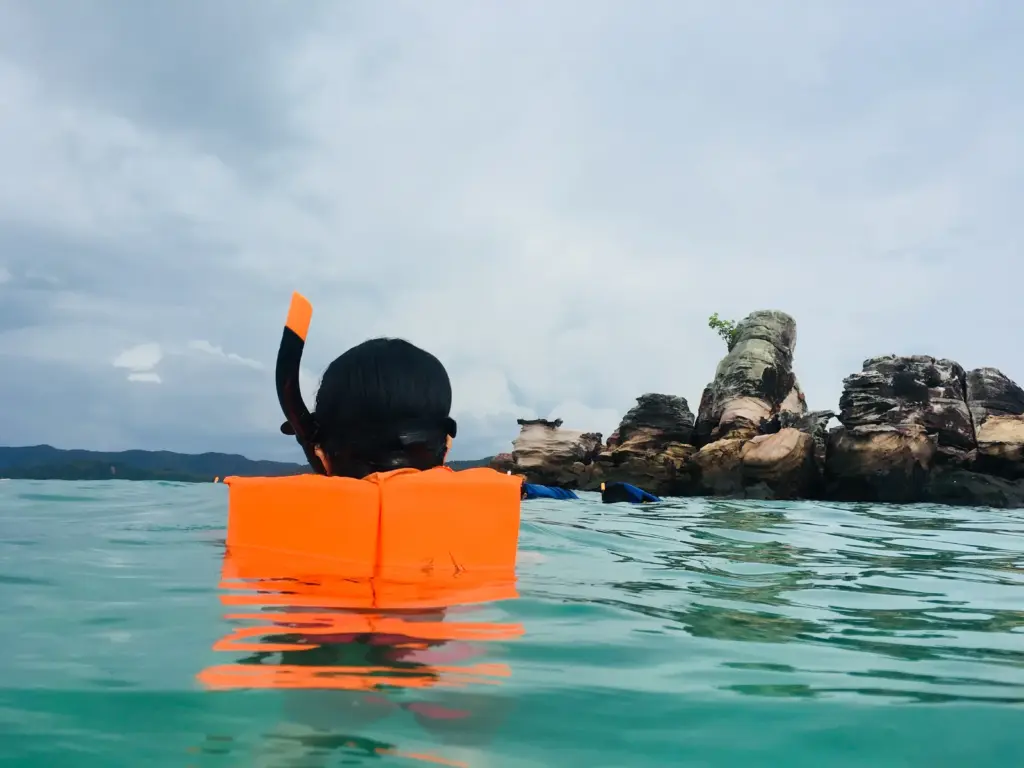
Khor Fakkan itself has a working harbour and a long beach, but the better diving is a short drive north around Al Aqah and Snoopy Island. The rocky outcrop off Sandy Beach looks like the cartoon dog lying on his back, and the shallow reef around it works well for check dives and easy afternoon sessions. Shark Island, closer to Khor Fakkan, offers more varied topography and is often used for deeper or drift dives when conditions allow. Neither site is a secret, but both reward divers who arrive with a plan rather than a vague hope.
Water temperatures from November to April sit in a comfortable range for a 5 mm wetsuit, and visibility is generally better than on the Arabian Gulf side. Currents can pick up around the islands, so listen to the local boat operator or shore briefing rather than assuming a flat surface means an easy dive. Bring your own certification card and logbook, because the operators on this coast are used to visiting divers but still need to see proof before they take you out. A surface marker buoy is worth packing, especially if you plan any drift or deeper profiles.
Timing your dives and the drive back
Plan your dives around the light. Morning sessions tend to have calmer winds and better visibility, while afternoons can bring chop and reduced sun on the reef. Leave a generous surface interval between your last dive and the drive back over the mountains, because the altitude gain is significant enough to matter for off-gassing. A conservative surface interval and a slow drive back to the interior are the simplest ways to keep the weekend safe.
What to pack for a car-based dive weekend
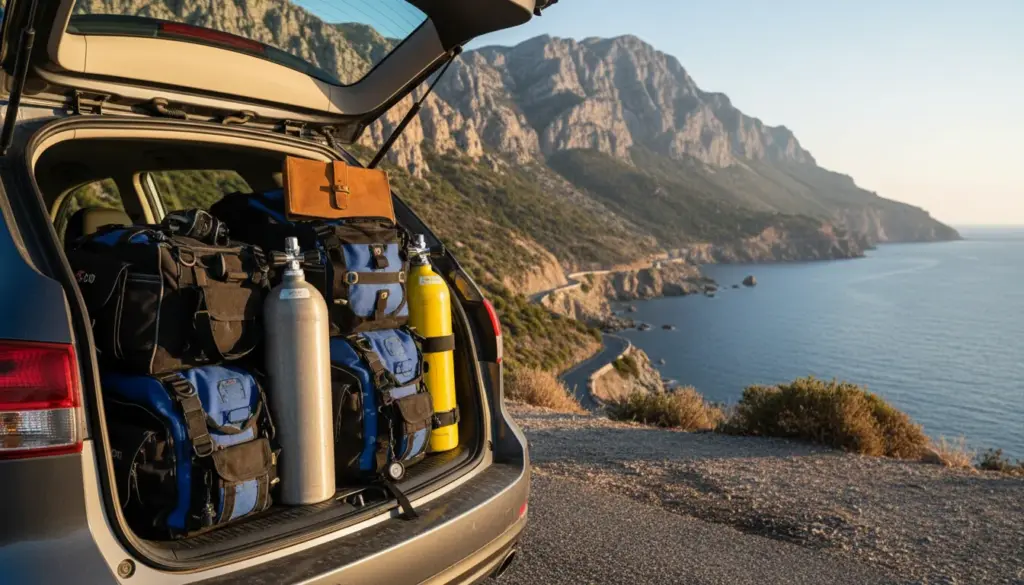
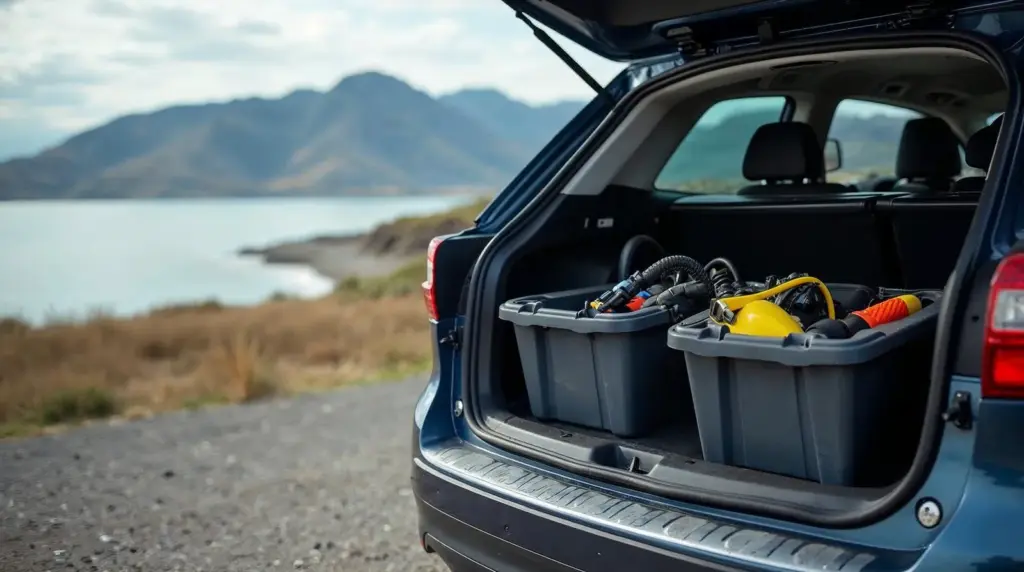
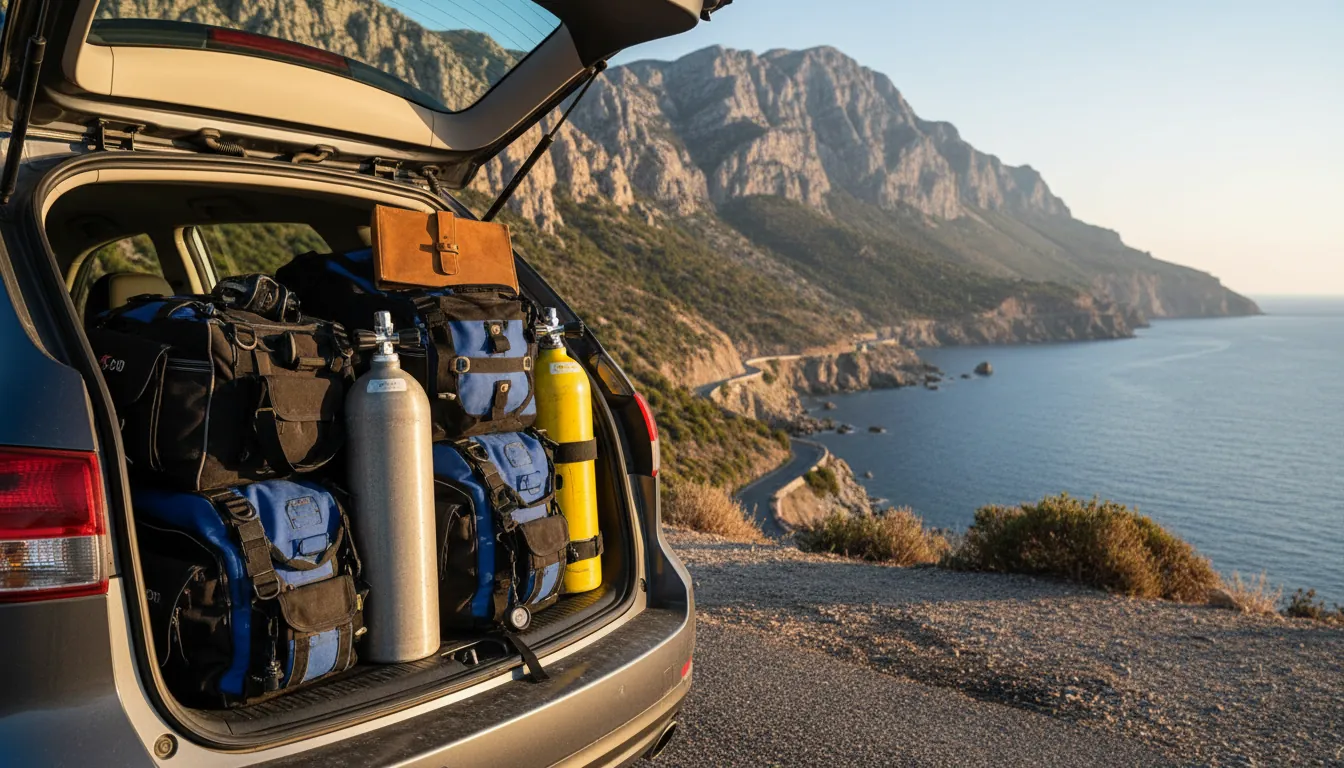
Packing for a dive weekend by car is less about weight and more about organisation. Use separate bags for wet gear, dry clothes and documents, so a leaking wetsuit does not soak your passport. A plastic crate or foldable box keeps regulators, masks and torches from rolling around the boot on mountain bends. Bring a small drying rack or a length of cord, because hotel balconies on the east coast are not always set up for hanging neoprene.
Signal, maps and charging
Phone signal is generally good on the main roads, but download offline maps before you leave Doha. The mountain section can drop signal in the tunnels and wadis, and you do not want to miss a turn because the map was buffering. A car charger with two ports solves the most common road trip argument, and a power bank gives you a backup if the car battery is tired. All of this fits in a small bag and removes most of the friction from a long cross-border drive.
Khor Fakkan itself: food, sleep and the non-dive hours
Seafood is the obvious choice, and the local restaurants serve grilled fish, rice and flatbread without much ceremony. Ask what came in that morning rather than ordering from a laminated picture menu. If you are staying closer to Al Aqah for the diving, the hotel restaurants are convenient but pricier, and the drive into Khor Fakkan for dinner is short enough to be worth it. Fill up on water and electrolytes, because a day of diving and driving in the sun leaves you more dehydrated than you realise.
Why the trip works by car
The whole trip works because it is self-contained. Your car carries the dive kit, the paperwork and the freedom to change plans when the sea is rough or the border is slow. Sort the insurance and the documents early. Break the drive overnight. The rest is just a matter of following the coast north until the water turns that particular Gulf of Oman blue.