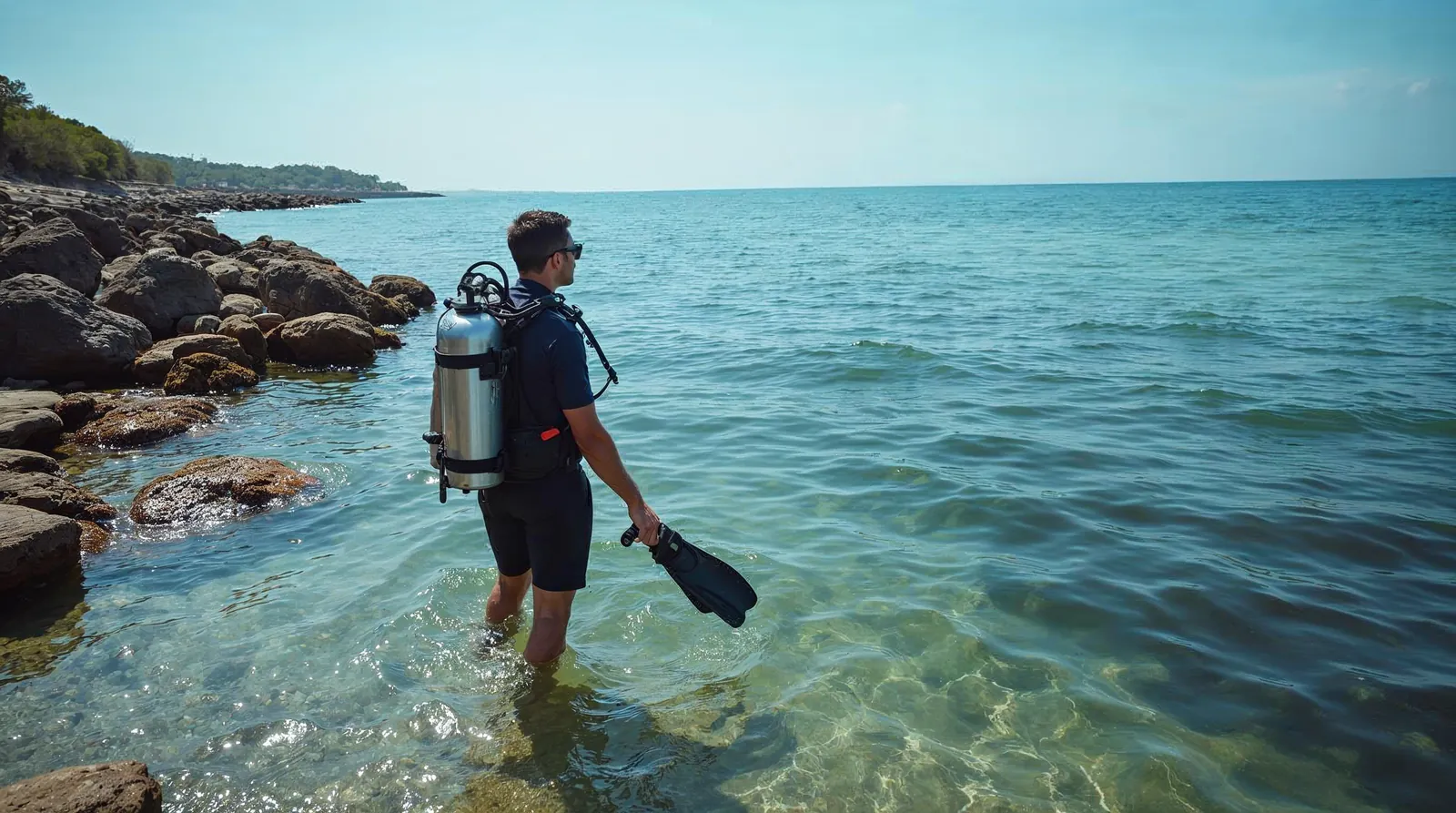
Standing at the edge of a shoreline on a calm morning, the water can look almost too easy. A flat surface, a gentle ripple, a few metres of sand disappearing under the shallows. Yet that same patch of sea can turn into a pushy, silty, exhausting exit route a short time later. The difference is rarely luck. It comes down to reading the water before you get wet.
Shore diving in many regions rewards divers who treat the sea as a moving system rather than a static pool. Wind, tide, bottom shape and season all leave visible clues that affect how water moves and where it may be safest to enter or exit. Once you learn to spot them, you stop relying on guesswork and start planning dives that feel smoother, safer and far more enjoyable. With practice, reading the water becomes a natural part of every shore dive.
Start With the Big Picture Before the Small Bay
When a site is new to you, begin by zooming out. Pull up a satellite view and a nautical chart of the region. Look at how the land meets the water, where rocky points break the shoreline and where shallow flats stretch out for hundreds of metres. These shapes control how water accelerates, slows down and changes direction as the tide rises and falls.
Charts also reveal bottom composition and depth contours. A steep drop-off close to shore can mean deep water with less current near the edge. A long shallow shelf can produce a strong sideways drift once the tide starts moving. In the Gulf, where tidal ranges are often modest, local geography matters more than the raw height of the tide.
Towns, marinas, desalination outfalls and construction near the coast are all worth noting. They can affect visibility, water quality and access. At the same time, they may offer useful facilities such as parking, showers or an easy concrete ramp. A quick look at the land around the bay often tells you more than a generic tide table.
How Tides and Currents Actually Behave on a Shore Dive
Tides are a form of long, slow swell with a roughly twelve-hour rhythm in many parts of the world. The water moves most strongly between high and low tide, not at the peak itself. Around high water and low water there is usually a short period of slack or near-slack conditions. That is the window many shore divers prefer for entries and exits.
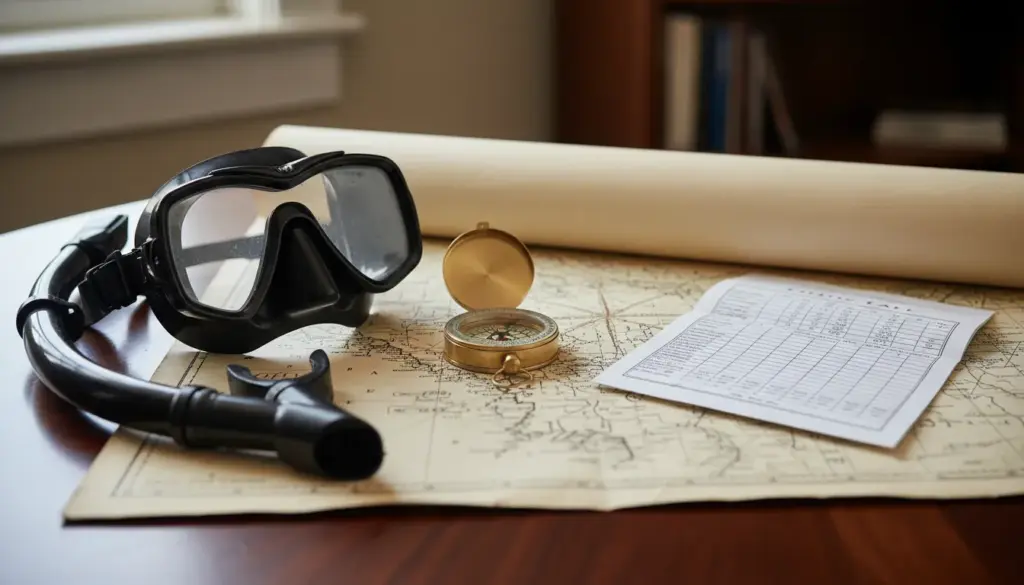
Current speed is not the same as tidal range. A site can have a tidal range of only half a metre yet still produce a noticeable current if the water is funnelled through a narrow channel or across a shallow reef. A range of one metre over a wide, open beach may produce almost no current at all. The shape of the seabed does the real work.
Local knowledge fills the gaps that charts cannot. Experienced divers and dive centres can tell you whether a particular bay is better on an incoming tide, at high water, or only during a narrow slack window. Some sites are forgiving at any state of tide, while others become genuinely difficult on a falling tide. There is no universal rule that fits every shoreline.
| Observation | What It Can Suggest |
|---|---|
| Long shallow flats near shore | Stronger sideways drift as tide moves |
| Steep drop-off close to beach | Often calmer near entry, deeper quickly |
| Narrow gap between rocks or reef | Faster current through the opening |
| Murky water after rain or runoff | Reduced visibility, possible pollutants |
| Rippled surface over a calm bay | Wind against tide, rougher conditions |
Use the table as a starting point, not a substitute for watching the site itself. The same bay can behave differently from one season to the next because wind, weather, and tides all shape its personality. A small change in wind direction can override the tide and alter surf or entry conditions. Over time you will build a mental library of how your favourite shore entries respond.
Timing Your Entry and Planning Your Exit
Reading the Water From the Shoreline
Before you put on fins, stand still for a few minutes and watch the surface. Look for lines of foam, debris or weed moving in a consistent direction. Those lines often mark the main current path. If the water looks smooth but a buoy or moored boat is leaning, that is another clue about what is happening below.
Check the angle of small waves against the beach. A shore break that is dumping on one side and flat on the other may indicate a rip or a change in bottom depth. These clues reflect how water moves over the underwater terrain and can affect your entry and exit points. In many coastal areas, wind often picks up by mid-morning, so an early start can give you the calmest surface and the clearest read of the tide.
Think about your exit before you enter. If the tide is falling, you may have to walk further across exposed rock or sand at the end of the dive. If the wind is rising, the surface chop may make your final swim more tiring. Choose an entry point that gives you an easy, visible route back to the same spot.
Building a Simple Pre-Dive Routine
A short routine removes much of the uncertainty. Check the tide table for high and low water times, then note the direction of travel. Look at a wind forecast for the hours you plan to be in the water. Compare that with what you actually see at the site, because forecasts are only a model of reality.
Talk to someone who has dived the site recently. Ask about current strength, visibility, entry points and any changes to the bottom. In many areas, shifting sand can alter a shore entry within weeks, so information from a year ago may be out of date. A quick conversation can save you a long surface swim.
Finally, agree on a plan with your buddy. Decide what you will do if the current is stronger than expected, where you will surface, and when you will turn the dive. Since water movement is highly location specific, your observations of the site’s conditions are essential for making these decisions. A simple plan built on observation is far more useful than a rigid rule about diving only one hour either side of high tide. This flexible approach helps you adapt to the ocean’s changing personality.
Shore Diving as a Skill, Not a Compromise
Many divers think of shore diving as the easier, cheaper option. In reality, it demands more planning than stepping off a boat. There is no captain to reposition the vessel, no ladder waiting at the end, and no quick exit if the current changes. But that independence is exactly what makes it rewarding.

A well-timed shore dive can offer long, relaxed bottom times over reefs that boat divers rarely visit. You can move at your own pace, surface when you choose, and repeat the same site in different conditions to learn its moods. Many coastlines, from rocky points to shallow flats, hold plenty of variety for divers willing to read them carefully. Learning to observe the water and understand local tide and current patterns helps you plan safer, more enjoyable entries and exits.
Start with forgiving sites and build your confidence over a season. Keep notes on what you observe, what worked and what surprised you. Over time, the water will stop looking like a blank surface and start looking like a map. That shift in perception is the real skill behind every safe and satisfying shore dive.